1. Part-transfer trays
Custom trays integrate with automation and speed up line setup.
 THE FAST 3D PRINTGet a quotation →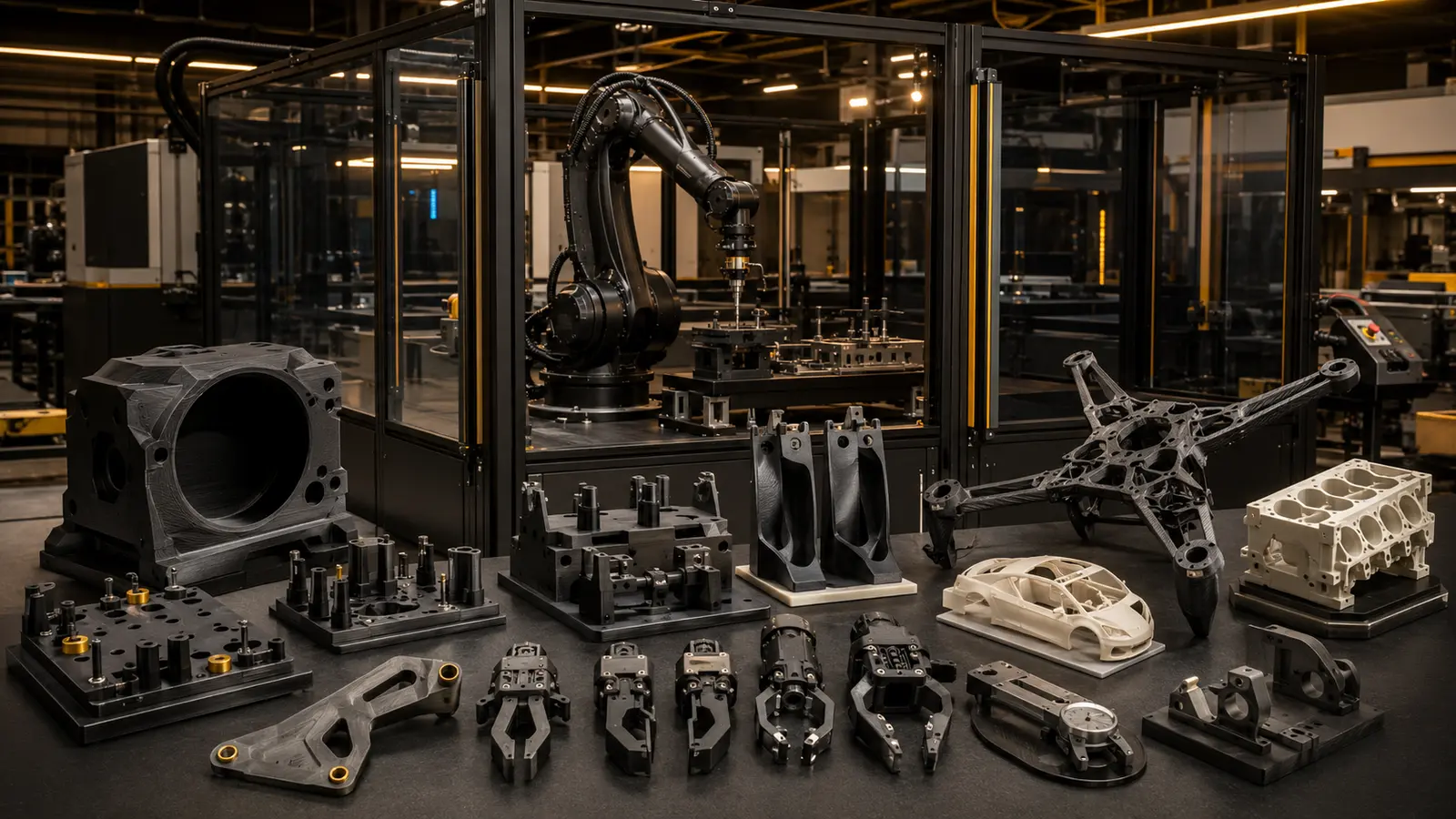
From production tooling and prototypes to racing, robotics and drone components.
FROM PROTOTYPE TO PRODUCTION
Industry uses 3D printing to shorten lead time, reduce tooling, validate designs before mass production and manufacture custom low-volume parts.
FDM is a common entry point because of accessible cost and broad material choice. Surface, speed and anisotropy must be managed, but the business impact can be substantial when the use case fits.
FACTORY FLOOR
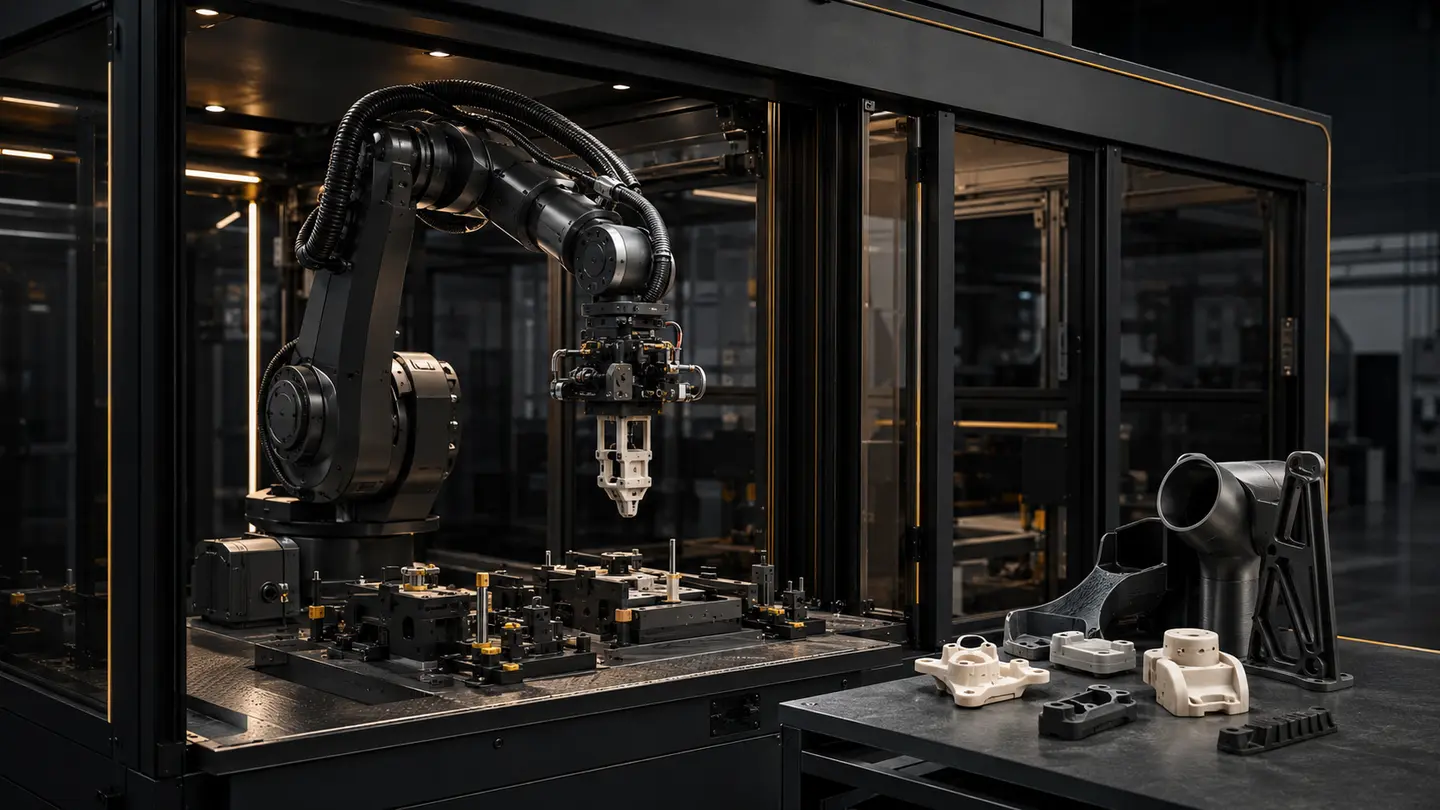
Custom trays integrate with automation and speed up line setup.
Validate dimensions, ergonomics and assembly before injection tooling.
Produce housings for electrical and sensor systems where standard parts do not fit.
Test assembly, durability and operation before final production.
Create fixtures for post-CNC inspection and motion checks before metal production.
CUSTOM & LOW VOLUME
Scale down large machinery for sales and exhibitions, reducing transport cost.
Topology optimisation removes unnecessary mass and enables hard-to-machine shapes.
Test a multi-part, multi-hardness system before metal production.
Respond faster to custom tooling needs while lowering conventional tooling cost.
Low-volume, light, strong housings can be customised for cameras and accessories.
BUSINESS DECISION
TIME · COST · RISK
Cost comparison should not stop at price per part. Conventional tooling may be economical at volume, but carries tooling investment, procurement lead time, revision cost and inventory. 3D printing lowers the entry cost and allows iteration before production is locked.
On a production line, a jig or fixture creates value by reducing setup time, downtime, scrap or operator variation. Its impact should be measured at workstation level rather than as an isolated part price.
Produce in days or weeks instead of waiting through repeated tooling or supplier cycles.
Validate fit, ergonomics and assembly before permanent production.
Hold validated digital inventory and make spares when needed.
Revise sensor, clamp or interface positions without restarting all tooling.
FROM PILOT TO PRODUCTION
Start with high lead time, scrap or revision frequency and record a baseline.
Specify load, temperature, chemicals, tolerance, surface and service life.
Optimise orientation, material, wall thickness, fastening and replacement for the process.
Inspect dimensions, run practical trials and document revisions and process parameters.
Lock the file, material, machine and acceptance criteria before repeat production.
USE-CASE MATRIX
| Problem | Suitable part | Expected result |
|---|---|---|
| Slow line setup | Jig · Fixture · Gauge | Shorter setup and fewer errors |
| Obsolete spare | Reverse-engineered housing | On-demand supply and lower inventory |
| Pre-CNC validation | Full-scale prototype | Validate fit, motion and assembly |
| Present large equipment | Scale mock-up | Explain form and function without transporting the machine |
| Custom low volume | Housing · Drone frame · Robot part | Revise without dedicated mould tooling |
SERVICE BUYER GUIDE
Searches for industrial printing, prototypes, jigs, fixtures and low-volume parts describe very different jobs. A useful quote needs files, function, quantity, deadline, material, finish, critical dimensions and acceptance criteria so FDM, resin, SLS/MJF or hybrid routes can be compared.
Send a file or image with your brief so Fast 3D Print can assess process, material, lead time and price before production.
Send us your file, dimensions, quantity and intended use. Our team can compare process, material, finishing and production risk before work begins.
Discuss your project →