Too hot
Can produce orange peel, oxidation and uneven colour from metal–investment reactions.
 THE FAST 3D PRINTGet a quotation →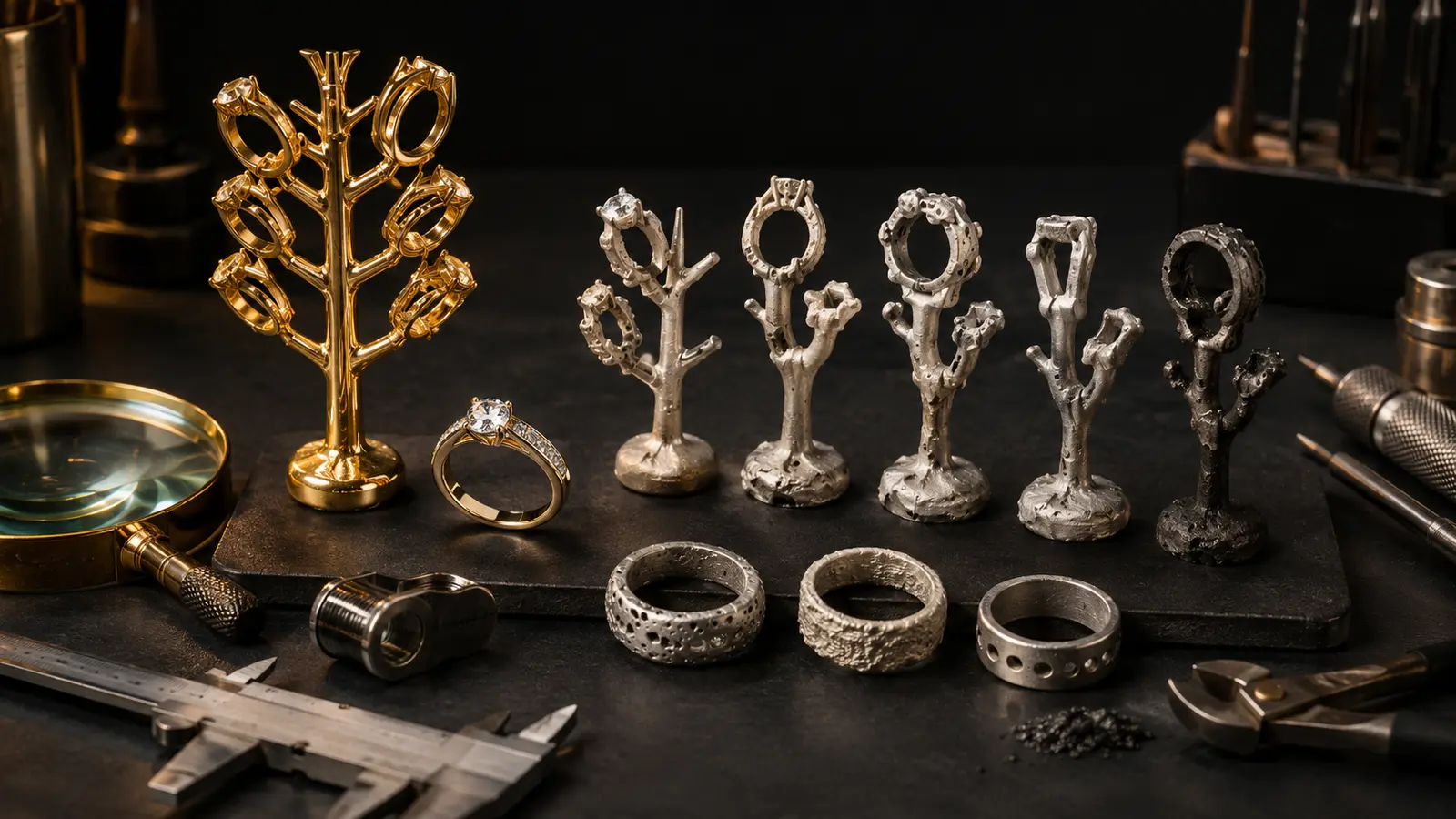
Separate sprue, investment, temperature, recycled-alloy and burnout problems to correct the real cause.
DEFECT ≠ RESIN ALONE
Lost-wax defects occur with both wax and castable resin. The real cause may be spruing, investment mixing, temperature, alloy quality or incomplete burnout.
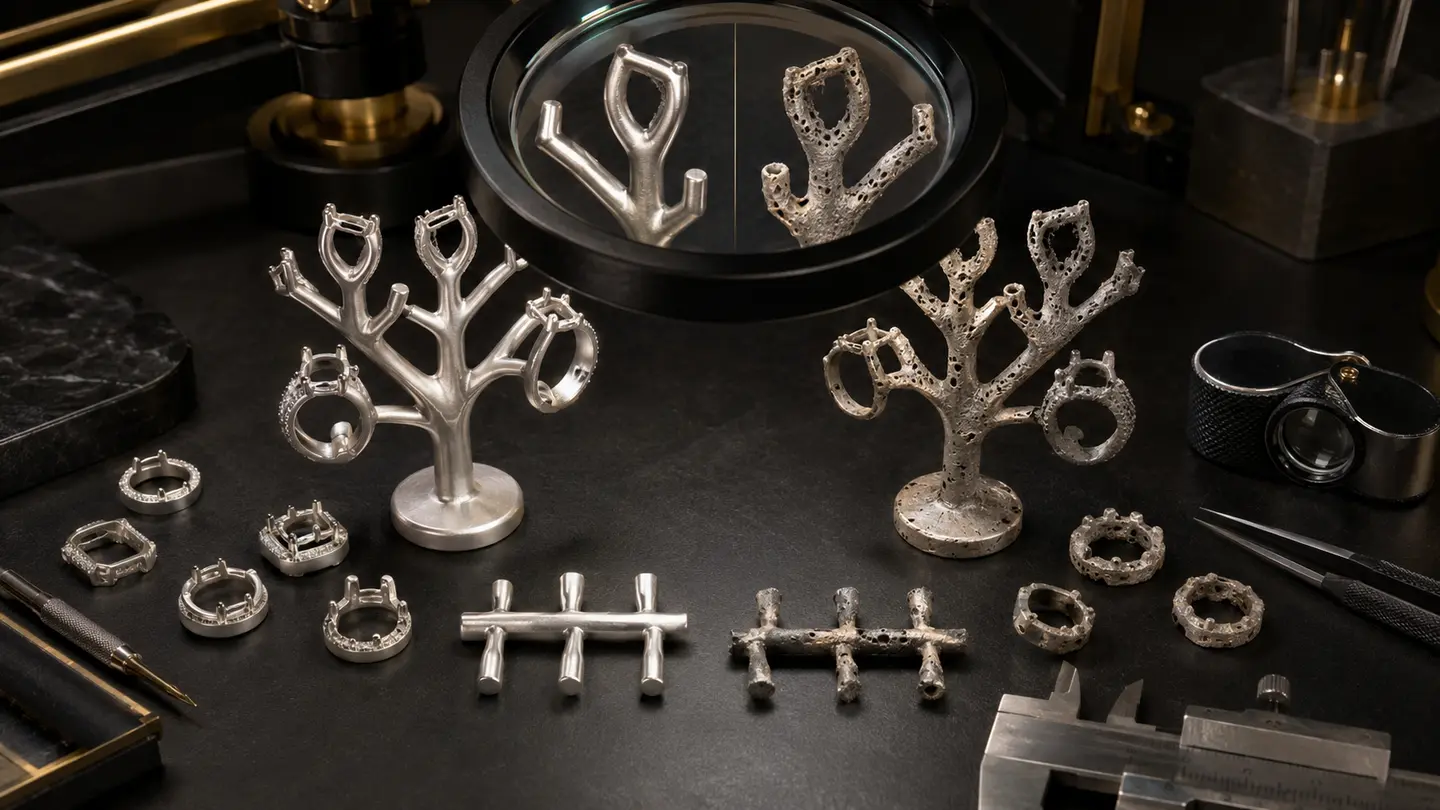
Accurate troubleshooting begins with defect shape, location, frequency and process records. Change one variable at a time.
CAUSE 01
Sharp joints, incomplete welds, closely spaced sprues or undersized feeds can cause turbulence, voids, shrinkage and investment inclusions.
CAUSE 02
Incorrect ratios, over- or under-mixing, entrained air and moving the flask before set can cause roughness, flashing, inclusions or mould failure.
Use distilled water, weigh ratios, control temperature and follow the investment's actual working time.
CAUSE 03
Can produce orange peel, oxidation and uneven colour from metal–investment reactions.
Metal may not fill, leaving rounded edges, missing features or crystalline-looking surfaces.
Check kiln, melt system and actual temperatures with calibrated instruments.
CAUSE 04
Repeated melting oxidises reactive elements, increases slag and gas pickup, and changes alloy chemistry, causing porosity, brittleness, colour shifts and poor flow.
The source recommends limiting recycled metal to roughly 30% and refining repeatedly melted material; always prioritise the alloy supplier's guidance.
CAUSE 05
Low actual kiln temperature, insufficient time or poor ventilation can leave wax, resin and carbon residues, producing pits, black deposits and inclusions.
DEFECT SIGNATURES
| Visible symptom | What to investigate | Supporting evidence |
|---|---|---|
| Deep pores or voids near feeds | Small sprue, sharp junction, turbulence or shrinkage | Repeats near heavy sections |
| General roughness or flashing | Investment ratio, mixing time, air or flask movement | Similar symptoms across the flask |
| Orange peel or uneven colour | Metal or flask too hot | Strongest on large or upper tree parts |
| Rounded, incomplete features | Low temperature, restricted feed or unsuitable casting force | Distant fine features fail first |
| Hard black inclusions or scattered pits | Incomplete burnout, carbon residue or poor ventilation | Residue appears in cavities and multiple areas |
ROOT-CAUSE METHOD
Record part face, tree position and flask level.
Separate voids, inclusions, roughness, incomplete fill, oxidation and cracking.
Compare resin/wax lot, investment ratio, mix time, burnout, temperatures and alloy.
Choose the cause that best matches location and defect pattern.
Keep all other variables stable to prove whether the correction worked.
PROCESS RECORD
SERVICE BUYER GUIDE
Porosity, incomplete fill, rough surfaces and investment cracking are symptoms, not single causes. Diagnosis needs defect location, pattern data, sprue system, burnout schedule, metal and flask temperature, alloy and recycled-metal ratio.
Send a file or image with your brief so Fast 3D Print can assess process, material, lead time and price before production.
Send us your file, dimensions, quantity and intended use. Our team can compare process, material, finishing and production risk before work begins.
Discuss your project →