1. Understand the technology
Additive manufacturing, FDM, resin, SLS, MJF, metal and materials.
 THE FAST 3D PRINTGet a quotation →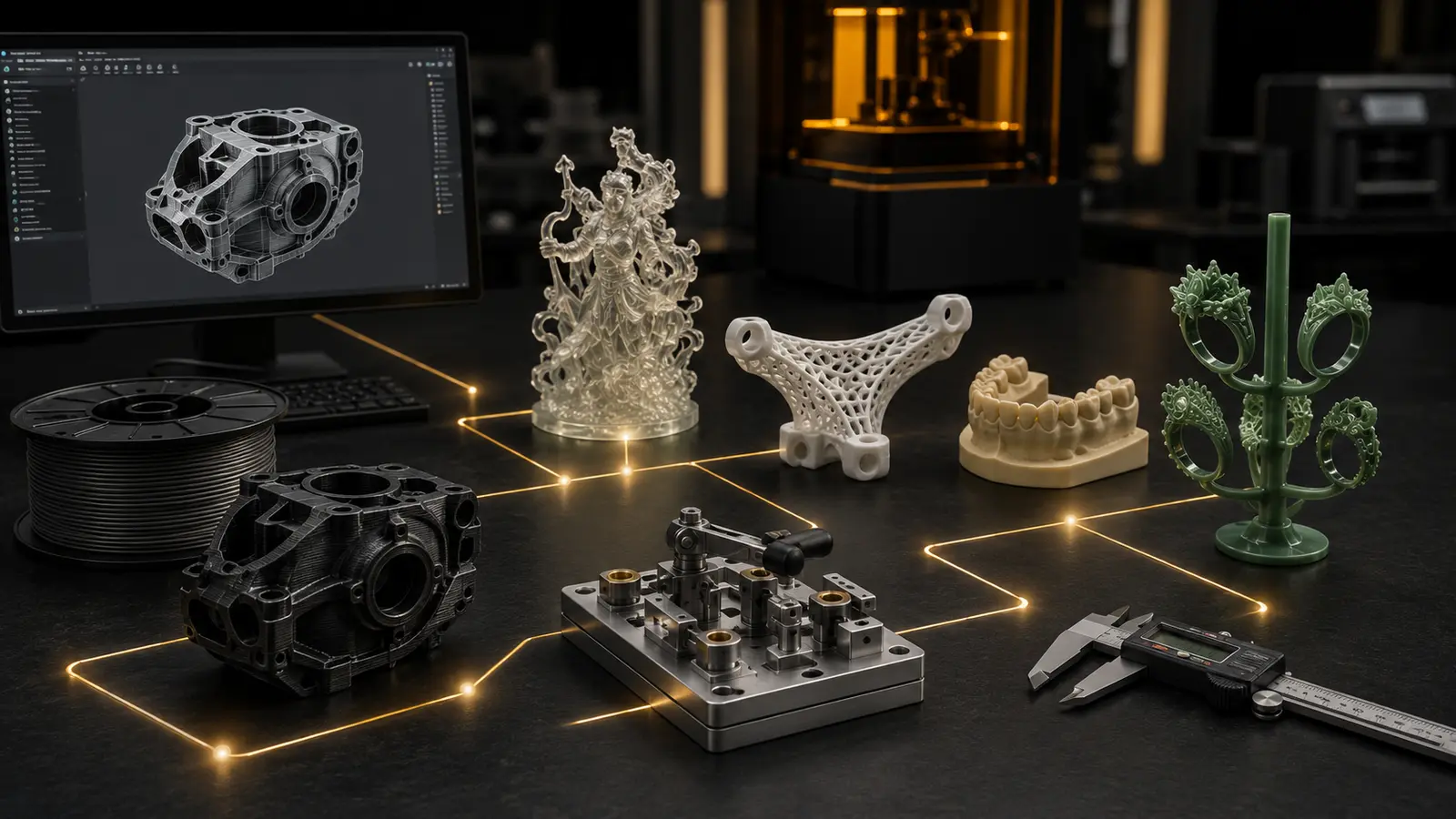
Navigate technology, materials, industrial applications, casting and dental topics according to the decision you need to make.
START WITH THE QUESTION
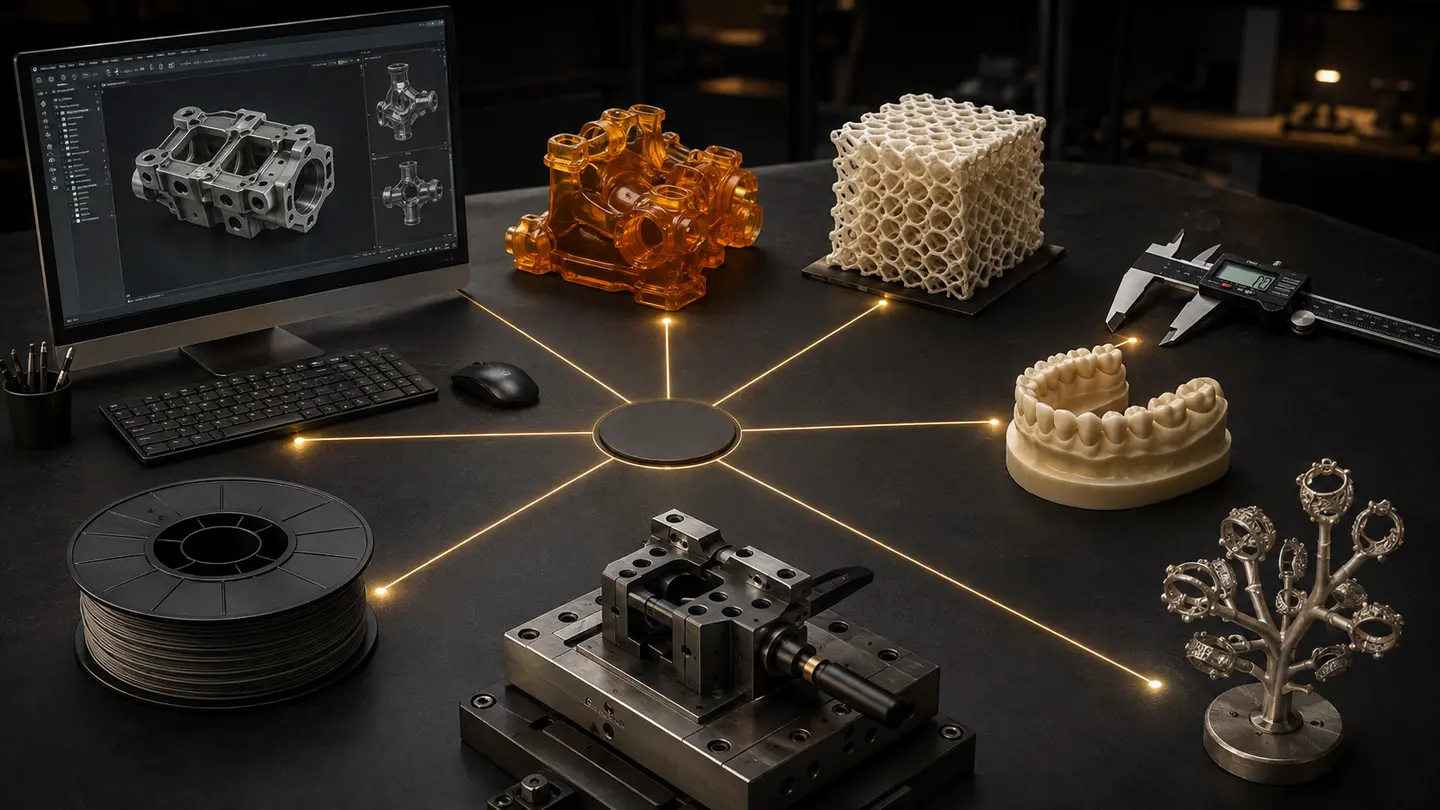
A sound 3D printing decision connects geometry and detail, material performance, production quantity and post-processing.
This series creates a path from fundamentals to specialised use, giving design, production and project owners a shared basis for discussion.
SEVEN READING PATHS
Additive manufacturing, FDM, resin, SLS, MJF, metal and materials.
Compare PA6, PA11, PA12, CF, GF and high-temperature grades.
Prototypes, jigs, fixtures, housings, mock-ups, robotics, racing and drones.
Printing, cleaning, spruing, investment, burnout and dimensional control.
Diagnose sprue, investment, temperature, alloy and burnout problems.
Scanning, CAD, resin printing, post-cure and patient-specific devices.
PROJECT BRIEF
KEEP LEARNING
Sync Innovation's article library covers technology, materials, reviews and maintenance for deeper product- and process-specific study.
KNOWLEDGE CLUSTERS
| Cluster | Core question | Topics to study |
|---|---|---|
| Technology | How does each process create a part? | FDM · Resin · SLS · MJF · Metal AM |
| Materials | Which properties does the application need? | PLA · PETG · ABS · ASA · TPU · Nylon · Resin |
| Design | How should the design change for production? | DfAM · Support · Orientation · Tolerance · Lattice |
| Process | How can results be repeated? | Calibration · Slicing · Drying · Wash · Cure · Inspection |
| Applications | Which use cases justify 3D printing? | Prototype · Tooling · Dental · Jewellery · Casting · Drone |
| Quality | How will the part be accepted and version-controlled? | Dimensions · Surface · Material lot · Traceability |
LEARNING SEQUENCE
Distinguish additive from subtractive methods and learn each process limitation.
Identify whether it is a visual model, verification part, casting master, tool or end-use component.
Consider load, heat, moisture, chemicals, surface and service life.
Define critical dimensions, revision, colour, finish and test method before quotation.
Use a test part or pilot lot to confirm fit and the process window.
PROJECT DECISION GATES
The objective should be measurable: save time, validate, present or perform.
Identify critical surfaces, dimensions, loads, fits and protected details.
Define realistic tolerance and appearance instead of asking for 100% identical output.
For repeat work, control the file, material, printer, profile and acceptance method.
FINAL CHECKLIST
SERVICE BUYER GUIDE
A customer may begin with searches for a nearby 3D printing service, price, scanning, modelling or casting. The correct path depends on the available input: a production-ready file, a physical sample for scanning, an image or idea requiring modelling, or an end-to-end pattern-and-casting workflow.
Send a file or image with your brief so Fast 3D Print can assess process, material, lead time and price before production.
Send us your file, dimensions, quantity and intended use. Our team can compare process, material, finishing and production risk before work begins.
Discuss your project →